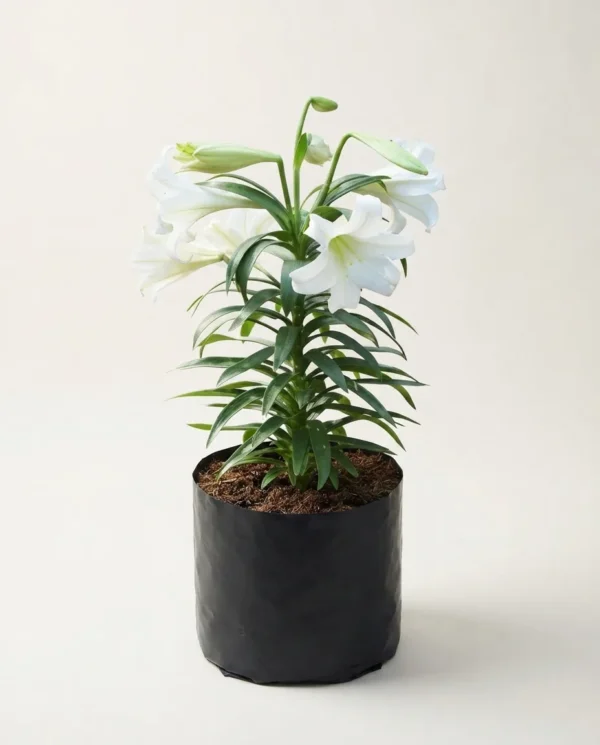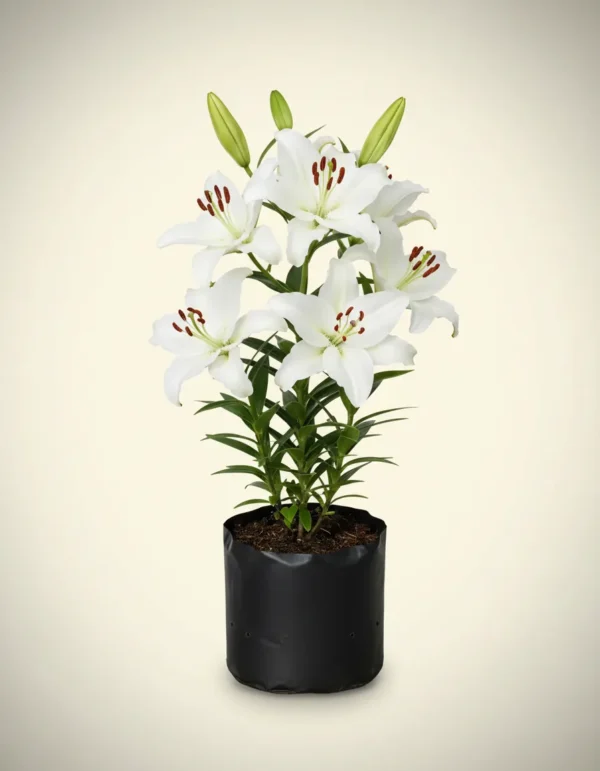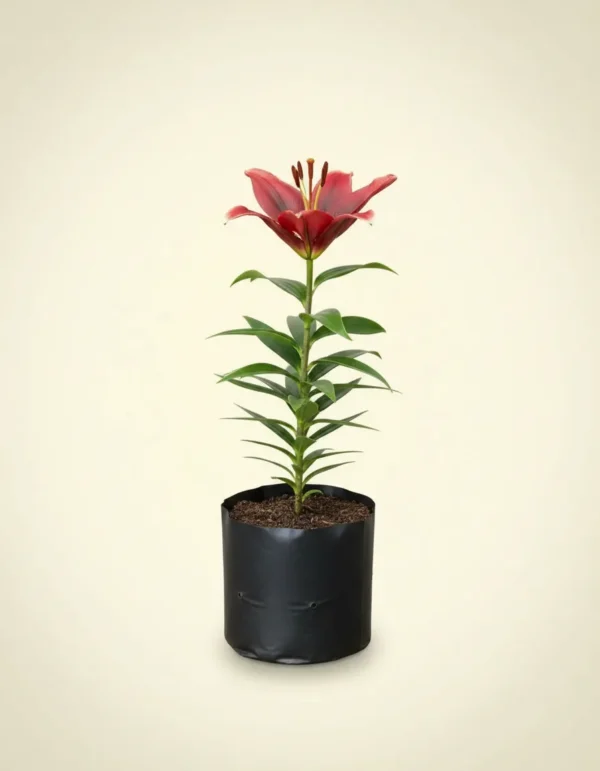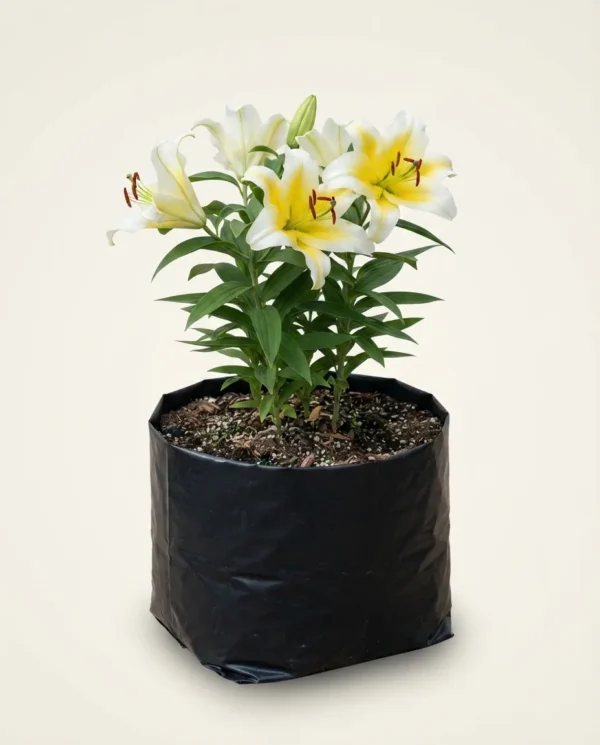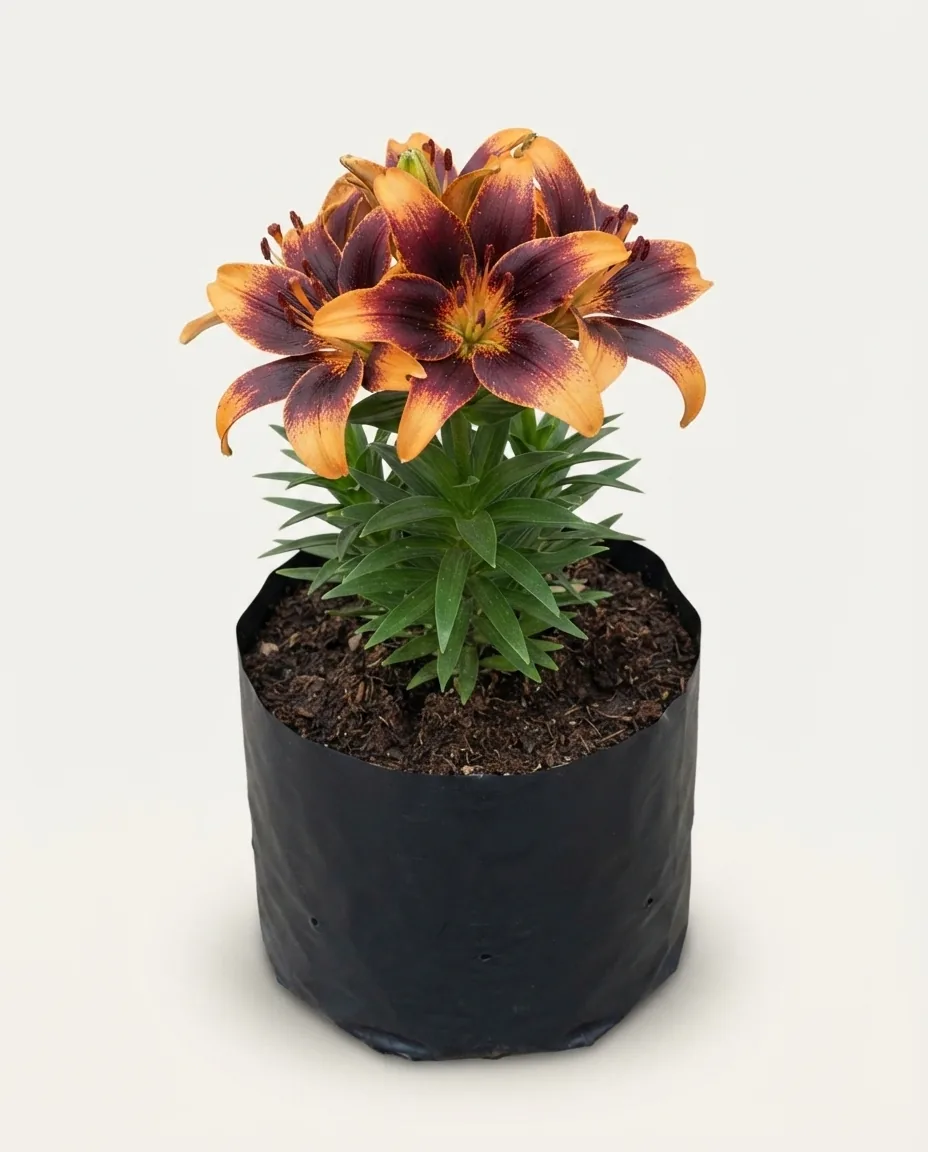
Lilium ‘Asiatic Starlette’
$7
Lilium ‘Asiatic Starlette’ is an Asiatic hybrid lily with upward-facing flowers on upright stems, for gardens and containers.
- A healthy, export-ready plant
- Phytosanitary certificate and export permit included
- Wholesale: 25% below the catalog price from 20 plants of this species, or 100 plants mixed (at least 4 per species)
Lilium ‘Asiatic Starlette’ at a glance
| Plant | Lilium ‘Asiatic Starlette’, Asiatic hybrid (Liliaceae) |
|---|---|
| Use | Garden borders and containers |
| Climate | Temperate gardens; in the tropics, cool highland conditions |
| What you receive | A healthy, export-ready plant |
| Documents | Export permit and phytosanitary certificate, included |
Why plant shops stock it
Asiatic lilies are easy, reliable garden lilies with bold flowers. They need a cool period to flower well, so in tropical lowlands they do best as a one-season pot plant.
Ordering for your shop
- Wholesale price: 25% below the catalog price when you order 20 Lilium ‘Asiatic Starlette’, or 100 plants in total with at least 4 of each species.
- Mixed orders: combine it with other plants and anything else in the wholesale catalog.
- Lead time: export documents take 7–14 business days. Delivery then takes 2–3 days to Singapore and about a week to the United States or Europe by DHL Express.
- Import permit: every US order needs a USDA import permit (PPQ 587). Read how to import plants from Indonesia for other countries, and our guide to the phytosanitary certificate.
- Payment: Wise or bank transfer after we confirm availability.
- Arrival guarantee: plants that arrive dead are replaced once, shipped with your next order. Report within 48 hours with an unboxing video and photos.
How we pack it
Plants are cleaned, treated against pests at the quarantine office and packed bare-root in sphagnum moss, or in tissue for countries that do not accept moss, inside ventilated boxes.
Care after arrival
- Light: full sun to light shade.
- Soil: free-draining; lily bulbs rot in wet soil.
- Water: regularly during growth, less after flowering.