Rhaphidophora is a genus of around a hundred climbing aroids, found from tropical Africa through Southeast Asia to New Guinea, Australia and the western Pacific. In nature they climb tree trunks; some, the shinglers, press their leaves flat against the bark. Indoors they need warmth, humidity and something to climb.
These are the rare Rhaphidophora we grow and export from Indonesia, and how to care for them.
Rhaphidophora care at a glance
- Light: bright, indirect
- Potting mix: airy aroid mix of bark, perlite and coco coir
- Water: keep slightly moist; water when the top few centimetres are dry
- Humidity: 60% or higher
- Temperature: 18–30 °C (65–86 °F)
- Support: a moss pole for climbers; a flat board or plank for shinglers
Rhaphidophora angustata
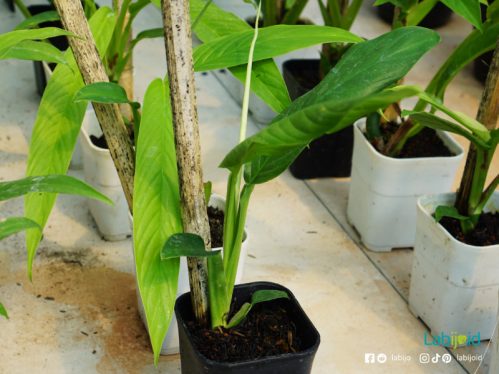
Rhaphidophora angustata is one of the easiest species to grow. It is a vigorous Southeast Asian climber with long, glossy green leaves that grow larger as the plant climbs. It tolerates lower light than most Rhaphidophora and does well on a moss pole, where it can quickly fill a corner.
Rhaphidophora cryptantha
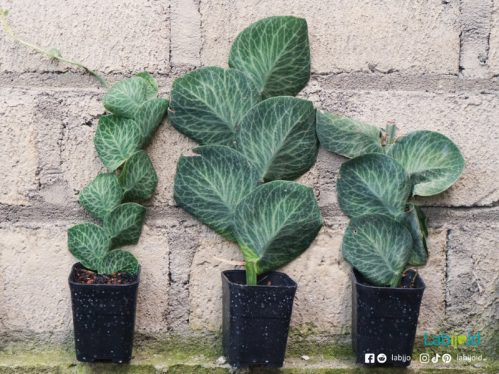
Rhaphidophora cryptantha from New Guinea is a true shingler: small, dark green leaves with silver veins lie flat and overlapping against its support. Give it a wooden board or a wide, moist moss plank, high humidity and bright, indirect light. See our separate cryptantha product page for sizes.
Rhaphidophora foraminifera
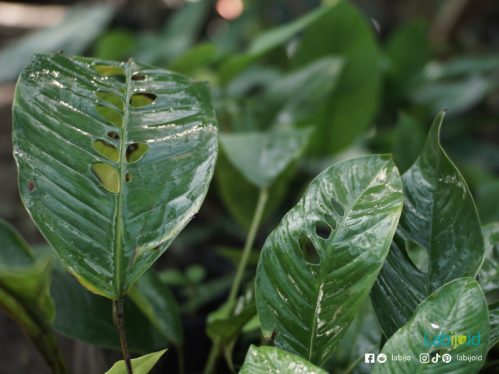
Rhaphidophora foraminifera develops leaves with small holes along the midrib as it matures, a look often compared to a monstera. It needs a pole to climb to reach that mature form. A variegated form is also available.
Rhaphidophora tenuis and other shinglers
Rhaphidophora tenuis Silver, R. korthalsii and R. megasperma start as shinglers with leaves pressed against their support, and change shape as they mature. Give them a flat board or plank and keep the humidity high.
Common problems
- Small leaves that do not mature: no support to climb, or too little light.
- Brown, crispy leaf edges: humidity too low.
- Yellow leaves and soft stems: overwatering or a dense mix.
- Thrips and spider mites: check leaf undersides; see how to protect indoor plants from pests.
Frequently asked questions
Is Rhaphidophora angustata easy to grow?
Yes, it is one of the easiest Rhaphidophora: a fast climber that tolerates average indoor light if it has a pole to climb.
What is a shingling plant?
A climbing plant whose juvenile leaves lie flat and overlapping against a tree trunk or board, like roof shingles. Rhaphidophora cryptantha is a classic example.
Is Rhaphidophora the same as Monstera?
No. Both are climbing aroids, and some Rhaphidophora have perforated leaves like a monstera, but they are separate genera.
Our plants travel bare-root; see how to help plants recover after shipping.
Buying for a plant shop? Labijo grows and exports Rhaphidophora and 1,000+ other tropical species from Indonesia, with the phytosanitary certificate included. Wholesale pricing, 25% below the catalog price, starts at 20 plants of one species or 100 plants mixed. See our wholesale Rhaphidophora plants or browse the full wholesale tropical and rare plant catalog.
