Tropical Fruit Trees from Indonesia
A wholesale guide for nurseries, garden centres and importers: which fruit trees we export, the size you receive, how import rules work for fruit plants, and how an order runs from your list to delivery.
Looking for seeds rather than plants? See tropical fruit seeds from Indonesia.
Fruit trees at a glance
- What we ship
- Young fruit plants: grafted trees, plus plants from cuttings or runners for dragon fruit and berries
- Size
- Most trees about 80–100 cm tall; the size is listed on each product page
- Roots
- Soil removed to meet phytosanitary rules, then treated and packed for export
- Wholesale minimum
- 20 plants of one variety, or 100 plants mixed (4+ each)
- Wholesale price
- 25% below catalog price
- Payment
- Wise or bank transfer, after we confirm the order
- Shipping
- DHL Express, or air cargo for larger volumes
- Documents
- Export permit and phytosanitary certificate with every shipment
Which tropical fruit trees we export
Most of our fruit plants are grafted named varieties from Indonesian growers. Stock changes every week, so each group links to what is available now in the fruit plants catalog.
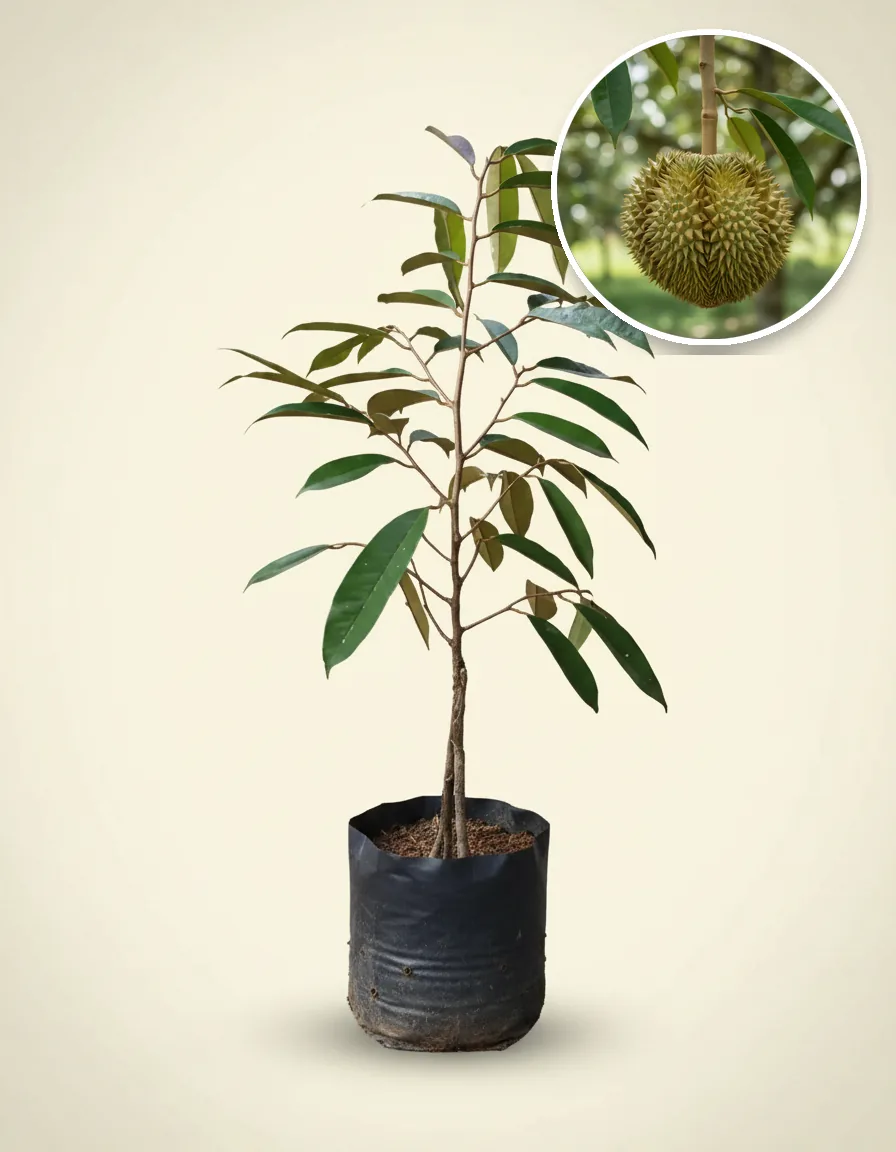
Durian
Durio zibethinus. Grafted named varieties such as Musangking and Black Thorn. Needs a hot, humid tropical climate all year.
Mango
Mangifera indica and the Indonesian kweni mango. Grafted varieties for warm climates with a dry season.
Avocado
Persea americana. Grafted varieties for warm, frost-free climates and free-draining soil.
Jackfruit and relatives
Artocarpus: jackfruit, mini jackfruit and jackfruit × cempedak hybrids. Large trees for the humid tropics.
Rambutan, longan and lychee
Sapindaceae fruit trees. Rambutan suits the humid tropics; longan and lychee flower best after a cooler, drier season.
Wax apple and water apple
Syzygium samarangense and S. aqueum (jambu air). Compact, quick-fruiting trees in many skin colours.
Guava and mangosteen
Psidium guajava fruits young and tolerates a range of conditions; mangosteen (Garcinia mangostana) is slow and needs the humid tropics.
Dragon fruit
Selenicereus species, grown from cuttings rather than grafted. Needs full sun and a post or trellis to climb.
Citrus
Lemons, limes, mandarins, pomelos and kumquats. Prohibited or tightly restricted in many importing countries, including the United States and the European Union, so check your rules first.
Subtropical and cool-climate fruit
Grapes, pomegranate, fig, apple, pear, plum and berries. Several need a cool season to fruit; in the tropics they are grown in the highlands.
Grafted, cutting or seedling: what you receive
Each product page states the plant type and height. Most fruit trees ship at about 80–100 cm, a size that travels well bare-root and establishes quickly after potting.
Grafted trees
A shoot of a named variety joined to a vigorous rootstock. Grafted plants fruit years sooner than seedlings and keep the fruit quality of their variety, which is why nurseries and orchards buy them. Most of our durian, mango, avocado, jackfruit, rambutan, wax apple and guava are grafted.
Cuttings and runners
Dragon fruit grows from rooted cuttings and strawberries from runners; blueberries, blackberries and raspberries are not grafted either. Their product pages say how each plant was propagated.
Seedlings and seeds
Seed-grown trees take longer to fruit and do not always come true to the parent variety; they are mainly used as rootstock or for breeding. Fresh seeds are seasonal and handled as a separate inquiry on our tropical fruit seeds page.
Import rules for fruit plants
Import rules decide what you can order, so we check them before anything else.
Check before you pay
Rules for fruit plants are stricter than for houseplants and differ by species and country. Some countries prohibit certain genera outright; others ask for an import permit, an inspection on arrival or post-entry quarantine. Send us your country and species list first and we confirm what can be exported before you pay.
Citrus and other restricted plants
Citrus is the most common refusal: it is prohibited or tightly restricted in many countries, including the United States and the European Union, because of citrus diseases. We tell you at the quote stage if a species on your list cannot go to your country.
United States
Every US order needs the buyer’s USDA import permit (PPQ 587); orders of 13 or more plants, and all orders to California, go through a USDA plant inspection station. See shipping plants to the US.
Documents and soil
Every shipment travels with an export permit and a phytosanitary certificate from the Indonesian quarantine agency. Fruit plants are shipped with the soil removed from the roots, as most countries require. See also plant import permits by country.
How a fruit tree order works
Export documents take 7–14 business days after payment. Delivery then takes 2–3 days to Singapore and about a week to the United States or Europe by DHL Express; larger volumes can go by air cargo.
-
Step 1
Send your list
Build it in the wholesale catalog and send it by WhatsApp or email, or send your own wishlist with quantities and your destination country.
-
Step 2
We check and quote
We check import rules for your country and current availability, then quote the plants and shipping.
-
Step 3
Payment and documents
You pay by Wise or bank transfer. We prepare the plants, the export permit and the phytosanitary certificate; this takes 7–14 business days.
-
Step 4
Shipping
DHL Express delivers in 2–3 days to Singapore and about a week to the United States or Europe; air cargo for larger volumes. You receive tracking.
Wholesale terms
- Wholesale minimum
- 20 plants of one variety, or 100 plants mixed with at least 4 of each
- Wholesale price
- 25% below the catalog price
- Smaller orders
- Quoted at catalog price, with the same documents and packing
- Payment
- Wise or bank transfer
- Dead on arrival
- Replaced once, shipped with your next order. Report within 48 hours with an unboxing video and photos.
Questions about fruit trees
Can you ship fruit trees to my country?
It depends on the species and your country’s import rules, which are stricter for fruit plants than for houseplants. Send your country and species list to [email protected] or WhatsApp and we confirm what can be exported before you pay.
Can you ship citrus trees?
Only to countries that accept them. Citrus is prohibited or tightly restricted in many countries, including the United States and the European Union, so we check your destination before quoting.
How big are the fruit trees you ship?
Most grafted fruit trees ship at about 80–100 cm tall. The exact height and plant type (grafted, cutting or runner) are listed on each product page.
Are your fruit trees grafted?
Most are, including durian, mango, avocado, jackfruit, rambutan, wax apple and guava. Dragon fruit grows from cuttings and strawberries from runners, and berries are not grafted; each product page says how the plant was propagated.
What is the minimum order?
Wholesale prices, 25% below catalog price, start at 20 plants of one variety or 100 plants mixed with at least 4 of each. Smaller orders are quoted at catalog price.
How long does delivery take?
Export documents take 7–14 business days after payment. Delivery then takes 2–3 days to Singapore and about a week to the United States or Europe by DHL Express; larger volumes can go by air cargo.
Do you sell tropical fruit seeds?
Yes, when in season. Seeds are handled as a separate inquiry; see tropical fruit seeds. We do not export fresh fruit.
Build your fruit tree list
Add the fruit plants you want to a list in our wholesale catalog, set the quantities, then send the list to us by WhatsApp or email, or download it as CSV. We check import rules for your country and availability, and reply within one business day.
Species not in the catalog, or prefer to chat? WhatsApp +62 882-1275-9151 or email [email protected].