There are hundreds of hoya species, which makes choosing hard. These five are collector favorites for good reasons: unusual leaves, scented flowers and easy care. Four of them come from Indonesia.
| Hoya | Origin | Why we like it |
|---|---|---|
| Sulawesiana Red | Sulawesi, Indonesia | Burgundy-red leaves |
| Imbricata Green and Purple | Philippines and Borneo | Dome-shaped leaves that hug the surface they grow on |
| Purpureofusca | Indonesia | Easy, pest-resistant beginner hoya |
| Rindu Rafflesia | Sumatra, Indonesia | Long, thin leaves and scented ivory flowers |
| Sp. Mamasa | Sulawesi, Indonesia | Green leaves with purple edges and bouquet-like flowers |
Hoya Sulawesiana Red

Hoya Sulawesiana Red is native to Sulawesi, Indonesia. They used to live in areas with high humidity, under the big trees, and vining the trees to thrive. For your home, you can keep them with moss and little soil as their base grows roots.
Hoya Sulawesiana Red is named after their burgundy red foliage color. Their foliage is quite thick with long shaped and pointy at the other side. Once they bloom, you will find hairy petals with small glossy ‘flowers’ in the center. The color would be red and purple-ish.
The green form, Hoya Sulawesiana Green, is also in our catalog.
Hoya Imbricata Green & Hoya Imbricata Purple
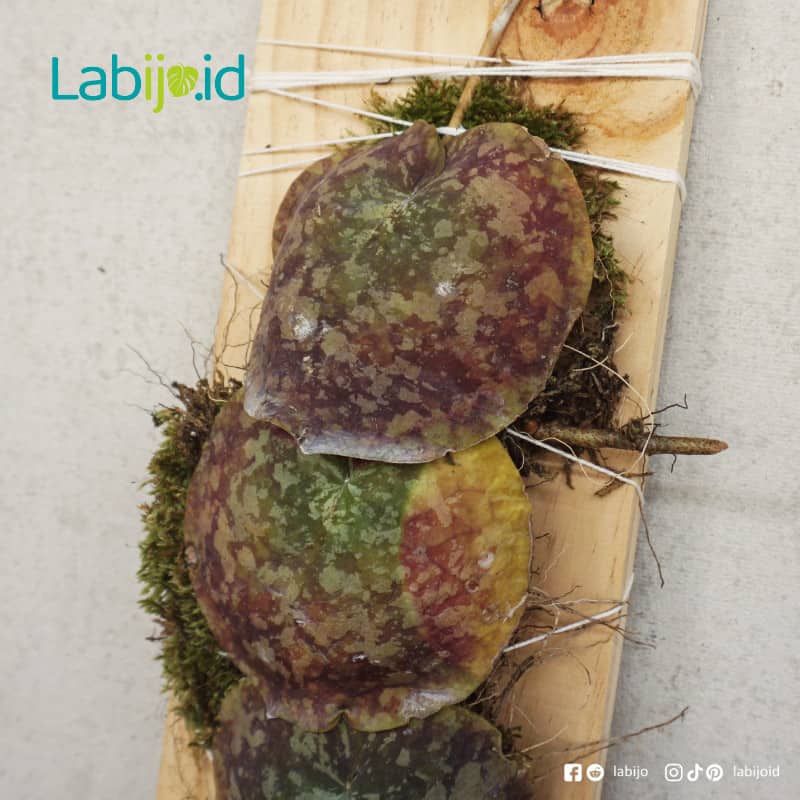

If you are looking for Hoya with a unique shape, you should take a look at Hoya Imbricata Green or Hoya Imbricata Purple. Their unusual dome shaped foliage has green and purple pattern splash.
They are native to the Philippines and parts of Borneo, where they grow in humid forest at medium altitude. They grow very slowly, and each leaf reaches about 7 to 12 cm across. Young leaves start green and glossy and turn matte as they mature. Hoya Imbricata Purple has more purple coloring across the whole plant.
Their flowers are small white petals with long stems. To reach this stage, it would take a long time since the plants themselves will grow slowly.
Hoya Imbricata Green and Hoya Imbricata Purple can easily be taken care of when you have a lot of patience.
Hoya Purpureofusca

One Indonesian Hoya that is easy to take care of is Hoya Purpureofusca. Coming from a middle altitude and humidity of around 50%-60%, this hoya is perfect for beginners. Bonus point since hoya is pest resistant, their personal traits so you don’t have to worry about them.
Hoya Purpureofusca will likely have moderate water portions, not too long nor too dry between each watering time with super light fertilizer. Their lighting needs bright indirect lighting like under big trees in the forest, where their natural habitat is.
Hoya Rindu Rafflesia

Hoya Rindu Rafflesia is named after the regions where Rafflesia flowers can be found. It is an area in Sumatra island, Indonesia. They are easy to find vining around in the other plants in the jungle.
Its long, thin leaves grow up to 7 to 9 cm. They store less water than thick-leaved hoyas, so it needs watering a little more often. Otherwise its care is the same as most hoyas. Hoya Rindu Rafflesia is available in our catalog.
Their flower has ivory white coloration with slightly higher yellow saturation in the center. The flower itself is ‘stacked’ on the glossy star-shaped flowers with the same color as the main flowers. Hoya Rindu Rafflesia has cinnamon and a bit of lemon on their scent.
Hoya Sp Mamasa

Hoya Sp Mamasa is native to Sulawesi forest in Indonesia who has green foliage as the main color and purple-ish coloration on the edge of foliage. Since they don’t need specific care means they are perfect for beginners plant parents.
In general, Hoya Sp Mamasa can stay in bright indirect areas with moderate watering needs. Their propagation only needs one petiole to stay in the water for 5-14 days until the new roots grow.
Hoya Sp Mamasa’s flower is one of the prettiest since it has white flowers with purple like their foliage at the center of flower buds. Their small flowers come in a group that will make it look like a mini bouquet.
We also grow a red form, Hoya sp. Mamasa Red.
How to care for hoyas
- Light: bright, indirect light. A little gentle morning sun helps them flower.
- Water: let the mix dry most of the way between waterings. Thick-leaved hoyas like Imbricata need less water; thin-leaved ones like Rindu Rafflesia a bit more.
- Mix: very airy, for example orchid bark and perlite with some sphagnum moss or coir.
- Humidity: 50 to 60 percent suits most hoyas; Imbricata likes it higher.
- Flowers: do not cut off old flower stalks (peduncles). Many hoyas bloom again from the same spurs.
- Propagation: a stem cutting with at least one node roots in water or moss within a few weeks.
Frequently asked questions
Why is my hoya not flowering?
Most often it needs more light or more time. Hoyas flower once they are mature, and many bloom better when they are slightly root-bound.
Are hoyas safe for pets?
Hoya carnosa is listed as non-toxic to cats and dogs by the ASPCA, and hoyas are generally considered pet-safe. Chewing any plant can still upset a pet’s stomach.
Find more hoyas in our plant catalog. Every export order includes a free phytosanitary certificate.
