Syngonium, the arrowhead plant, is one of the easiest aroids to grow indoors. Most plants sold are Syngonium podophyllum and its cultivars, from plain green to pink, white-marbled and speckled forms. Young plants have arrow-shaped leaves; given something to climb, mature plants develop lobed leaves and grow into a vine.
This guide covers when to plant and propagate syngonium, the conditions it needs indoors, and how to fix the problems growers see most.
Syngonium at a glance
- Botanical name: Syngonium podophyllum and related species (Araceae)
- Origin: tropical forests of Mexico, Central and South America
- Light: bright, indirect; variegated forms need the brighter end
- Water: when the top 2–3 cm of soil is dry
- Humidity: 50% or higher
- Temperature: 18–29 °C (65–85 °F); keep it above 15 °C (59 °F)
- Toxicity: contains calcium oxalate; keep away from pets and small children
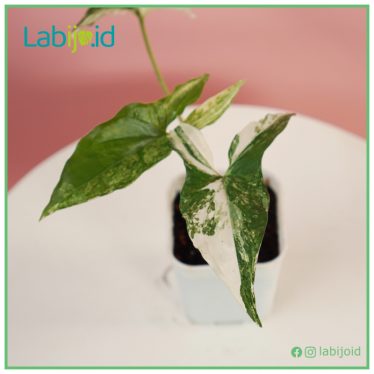
When to plant and propagate syngonium
The best time to pot, repot or propagate syngonium is spring and early summer, when days are long and warm and the plant is growing fastest. Cuttings root in two to four weeks in that season. In a heated home or in the tropics you can do it any time of year, but expect slower rooting in short, cool days.
Plants that arrive bare-root should be potted the day they arrive, whatever the season. Our guide on helping plants recover after shipping covers the first weeks.
Light
Give syngonium bright, indirect light. Direct midday sun scorches the leaves, especially on white or pink varieties. In low light the plant stretches, leaves get smaller, and variegated forms such as albo and Three Kings lose their colour. A spot near an east-facing window, or a grow light for 10–12 hours a day, works well.
Soil and pot
Use an airy, well-draining mix: a houseplant potting mix with added perlite and orchid bark, or a chunky aroid mix. In our nursery we add sand and charcoal for extra drainage. Choose a pot with drainage holes, only slightly bigger than the root ball.
Watering and humidity
Syngonium likes evenly moist soil, but not wet. Water thoroughly when the top 2–3 cm is dry, which may be once or twice a week in warm weather and less in cooler months. Never leave the pot standing in water. Keep humidity at 50% or higher; brown, crispy leaf tips are usually a sign of dry air or a pot that dried out completely.
Temperature and feeding
Keep syngonium between 18 and 29 °C and away from cold drafts; below about 15 °C growth stops and leaves may yellow. Feed with a balanced liquid fertiliser at half strength every two to four weeks in spring and summer, and stop in winter.
Climbing or bushy
Left alone, syngonium grows long trailing stems. For a bushy plant, pinch out the growing tips regularly. For larger, lobed leaves, give it a moss pole or a plank to climb and tie the stems loosely to it.
How to propagate syngonium
- Cut a stem section with at least one node (the point where a leaf and aerial root grow) and one or two leaves.
- Put the cutting in clean water, or in moist sphagnum moss or a light mix.
- Keep it warm and bright, out of direct sun, and change the water every few days.
- Pot the cutting once the roots are 3–5 cm long.
Common problems
- Yellow lower leaves: usually too much water or a pot that drains poorly.
- Brown, crispy edges: dry air, or the soil dried out completely.
- Long, thin stems with small leaves: not enough light.
- Variegation fading or leaves turning green: low light, or the plant is reverting; cut back to a well-variegated node.
- Pests: spider mites and mealybugs; see how to protect indoor plants from pests.
Popular syngonium varieties
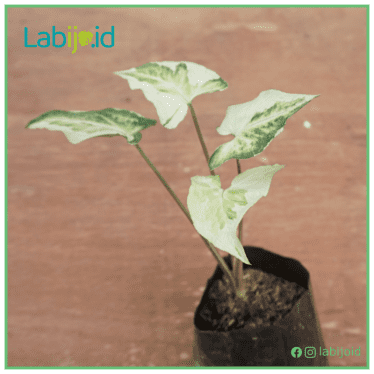
- Syngonium albo: white-marbled leaves, sometimes half or fully white
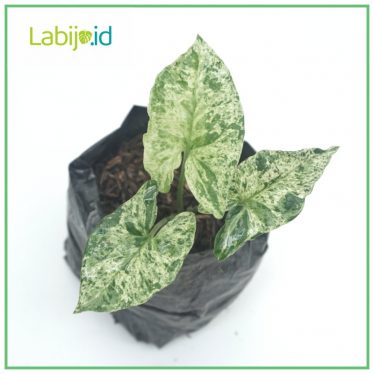
- Syngonium Three Kings: cream and green marbling, more stable than albo
- Syngonium mojito: cream speckles and splashes on green
- Syngonium pink: pink-flushed leaves
- Syngonium wendlandii: a different species with velvety dark leaves and silver veins
Frequently asked questions
When is the best time to plant syngonium?
Spring and early summer, when it grows fastest. Indoors in a warm home you can plant and propagate it any time, but rooting is slower in winter.
Does syngonium need a lot of light?
Bright, indirect light. Green forms tolerate lower light; variegated forms need brighter light to keep their colour, but no harsh direct sun.
Is syngonium toxic to cats and dogs?
Yes. It contains calcium oxalate crystals that irritate the mouth and throat. Keep it out of reach of pets and small children.
How often should I water syngonium?
When the top 2–3 cm of soil is dry: often once or twice a week in warm months, less in winter.
See all syngonium varieties in our catalog.
Buying for a plant shop? Labijo grows and exports syngonium and 1,000+ other tropical species from Indonesia, with the phytosanitary certificate included. Wholesale pricing, 25% below the catalog price, starts at 20 plants of one species or 100 plants mixed. See our wholesale Syngonium plants or browse the full wholesale tropical and rare plant catalog.
